A Fake Trade Dollar That Fooled Almost Every Test
Real Silver, Just Not Enough
Not every counterfeit is base metal under a thin coat of silver. Some are real silver, just not enough of it, and shaped to beat the exact tests collectors trust. Back in 2022 we got hold of an 1874 Trade Dollar, reported by Speg, a YouTuber known for precious metal coins. Correct weight, correct diameter, correct density, a textbook silver acid reaction, and it passed our app. Almost every test called it genuine. So did a lab's XRF on the coin's surface.
Only when we cut it open and had it assayed did the truth show up: a core of about 78.7% silver hiding under a thin skin of 90% silver, the fineness of a real Trade Dollar. Here is how it beats almost everything, and how the app handles it today.
Why It Is So Hard to Catch
A genuine Trade Dollar is .900 fine, 90% silver. This coin defeats testing two different ways at once.
First, it wears a silver skin. The outer layer is enriched to about 90% silver, so any reading that only sees the surface is fooled. The lab's XRF shows this cleanly: on the intact surface it read 90.39% silver, but after a thin layer was ground away the same machine read 79.33%, then 78.74%. Same coin, same instrument, opposite verdicts, depending only on how deep it looked.
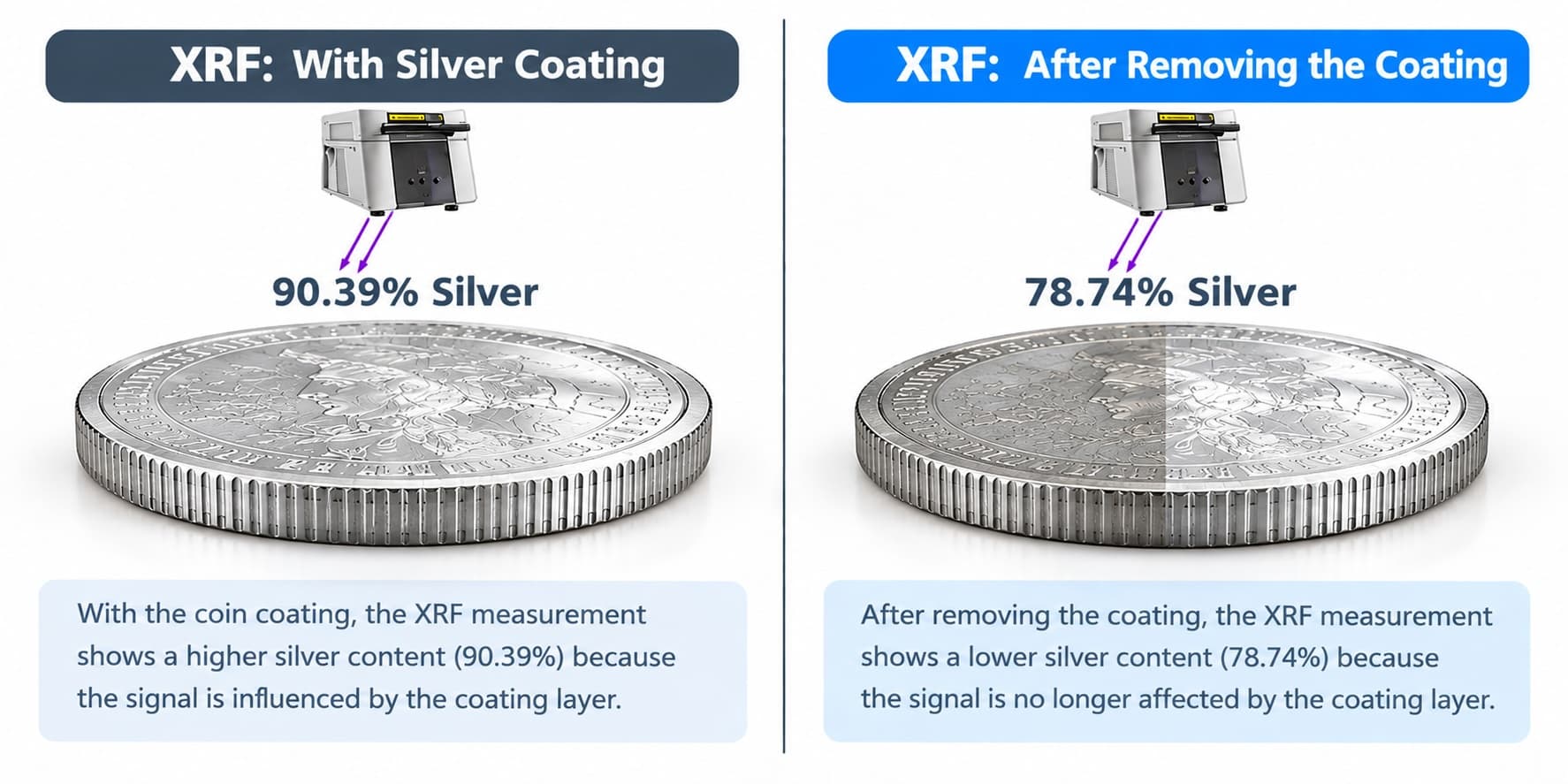
Second, and more important, the metal underneath is real silver at about 78%. That is close enough to 90% that the usual bulk checks cannot tell the two apart. 78% silver is almost as dense as 90% silver, so the density test passes. It gives the same red acid reaction, so the acid test passes even when you drop it straight onto the bare cut core. In a coin of the right weight and size, it even rings closely enough to pass a ping test. Being mostly silver and close to spec is the whole disguise.
So what actually separated 78% from 90%? Only two measurements were both deep enough and sharp enough. Sigma Metalytics reads the metal's bulk conductivity, and 78% and 90% silver conduct differently enough for it to flag the coin without any damage. Potentiometric titration dissolves a piece of the real metal and measures the silver directly, which is exact but destroys what it tests. Everything else was either fooled by the skin or too coarse to resolve a 12-point gap in a genuinely silver coin.
The Scorecard: Eight Tests, One Glance
Here is every test run on this coin, cheap methods first, expensive ones last.
| Test | Destructive? | Result | What it read |
|---|---|---|---|
| Caliper (diameter) | No | Pass | Matches a genuine coin |
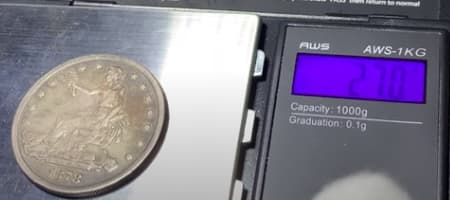
| Scale (weight) | No | Pass | 27.2 g, matches genuine |
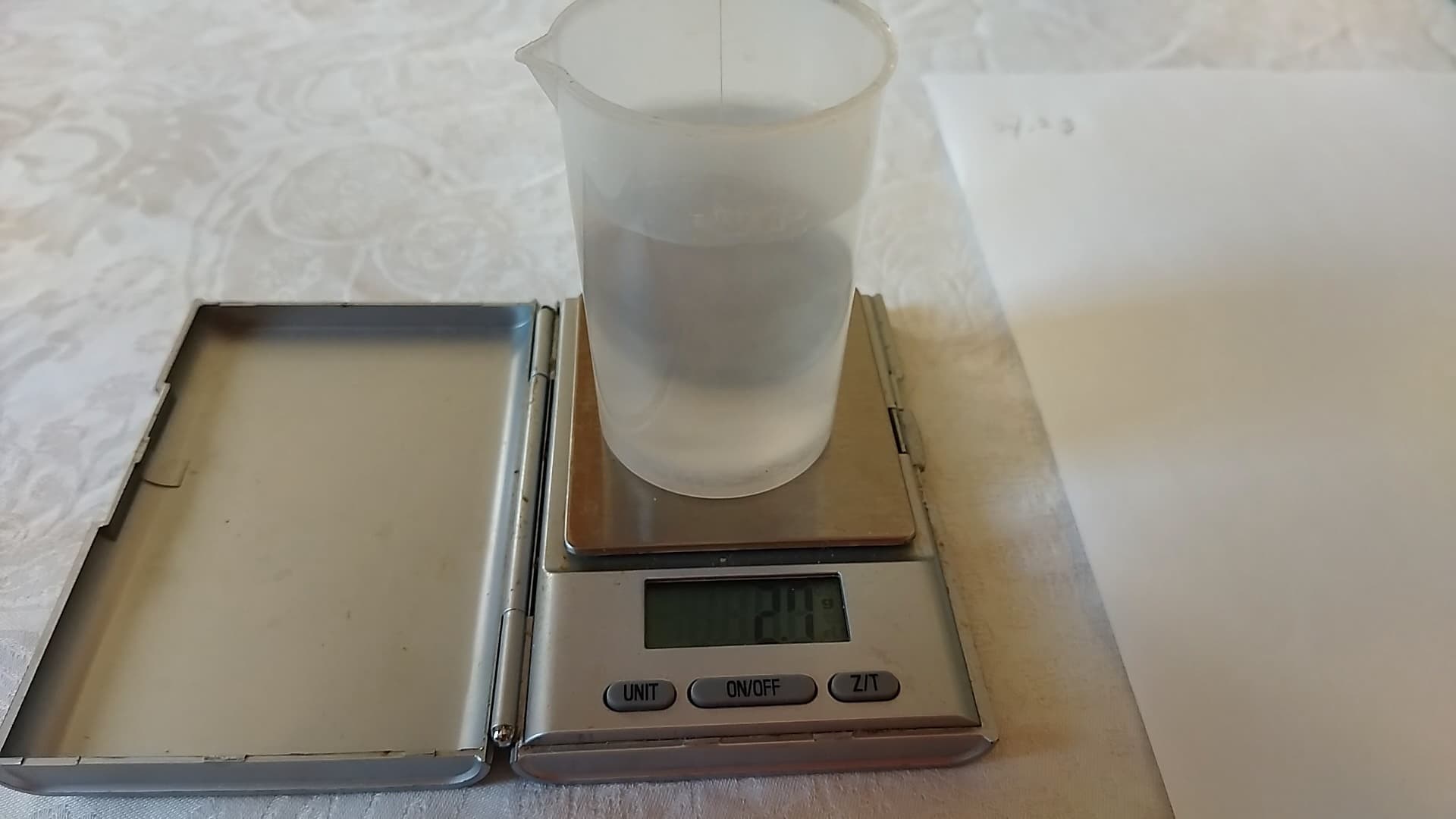
| Density | No | Pass | ~10 g/cm³ (.900 silver) |
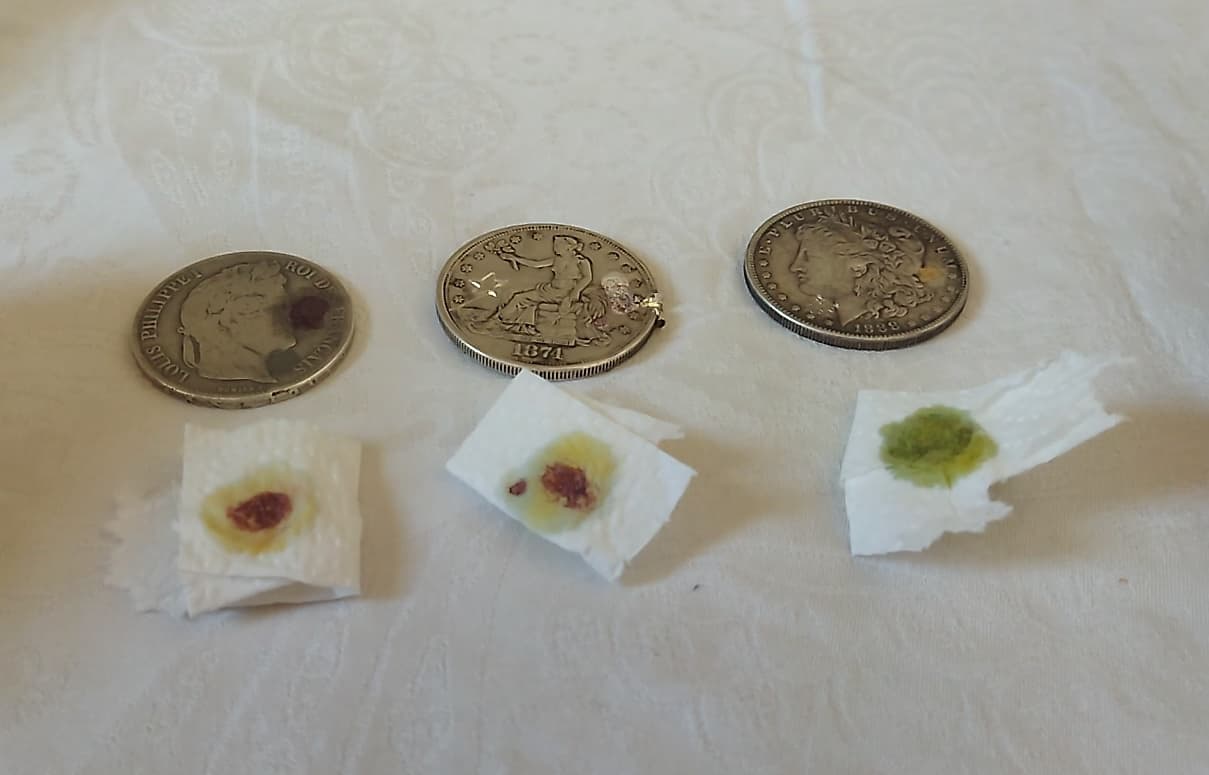
| Acid | Yes | Pass | Over 90% silver |
| Precious Coin Tester (sound) | No | Pass | 2 stars (2022) |
| XRF | No | Pass | 90.39% (surface) |
| Sigma Metalytics | No | Fail | Red flag |
| Potentiometric titration | Yes | Fail | 78.71% |
Read that table carefully. Pass means the coin passed the test, so the test was fooled. Fail means the test flagged the coin, so it caught the fake. Only two methods failed the coin: Sigma, without damaging it, and titration, which required cutting out a sample. The Precious Coin Tester row is the 2022 result; today the app reports a conservative minimum purity instead, which we cover below.
For reference, a Sigma unit or a handheld XRF runs around $1,000, while a lab titration costs $30 to $50 per test and consumes a sample. The cheapest non-destructive method that caught this coin was Sigma.
How We Know
We came across Speg's video of this fake, wanted to understand it, and asked him for the coin. He kindly sent it over. In his own testing, the only instrument that had flagged the coin was the Sigma verifier. Everything else, including our app, had passed it.
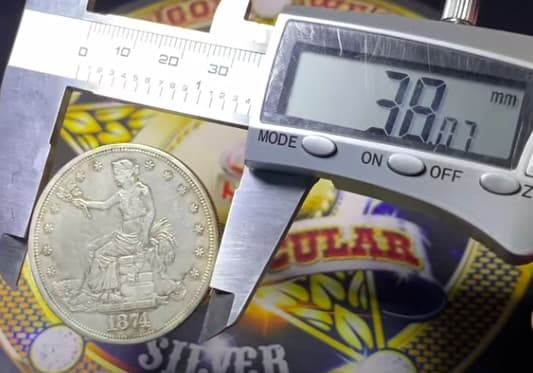
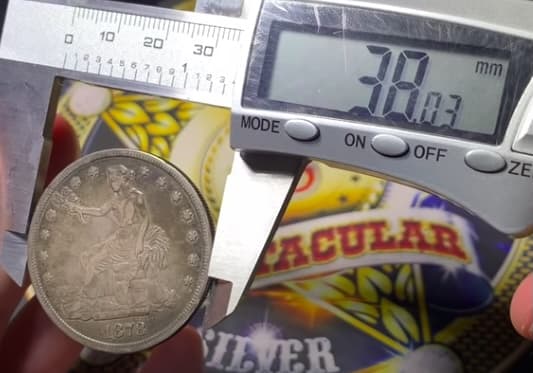
Speg's own video showed the cheapest checks first: caliper and scale, against a genuine Trade Dollar for reference. Both coins calipered to the same diameter.
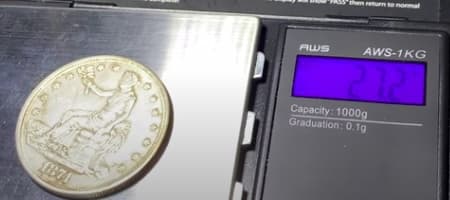
His scale told the same story: the fake weighed 27.2 g, matching a genuine coin's weight.
When the coin arrived, we picked up from there. It came out around 10 g/cm³ by water displacement, in line with .900 silver.
A silver acid test only deepened the puzzle. Next to a known genuine 90% coin and a known base-metal fake, the Trade Dollar left the red-brown mark of silver while the base-metal fake turned green. That proves silver, not purity: 78% and 90% silver give nearly the same color. The one odd note was a white residue the coin left on an inner-material test that the genuine coin never produced, a faint hint that its insides were unusual.
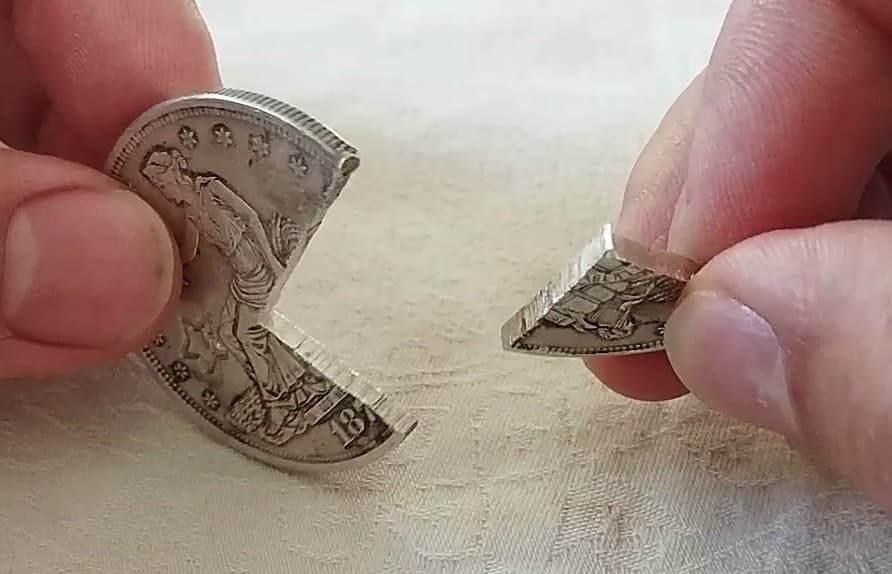
To get past color, we cut a wedge out of the coin. The cross-section looked homogeneous, and acid dropped straight onto the bare cut still turned dark red, the same as the surface. Even the exposed core read as silver. Color could not give us a number, so we sent a sample to a lab.
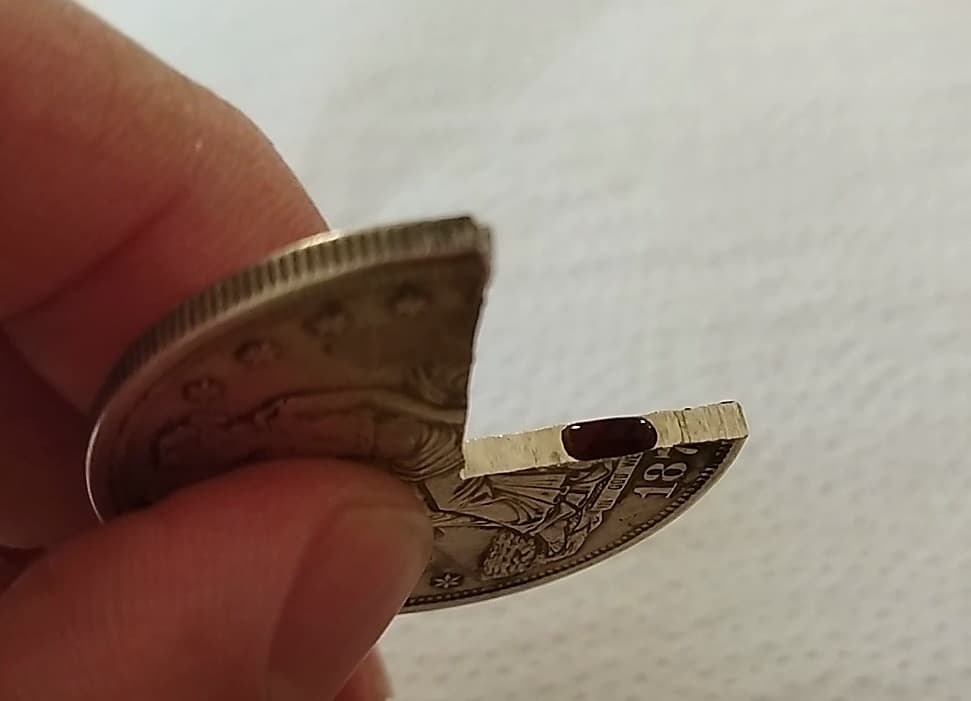
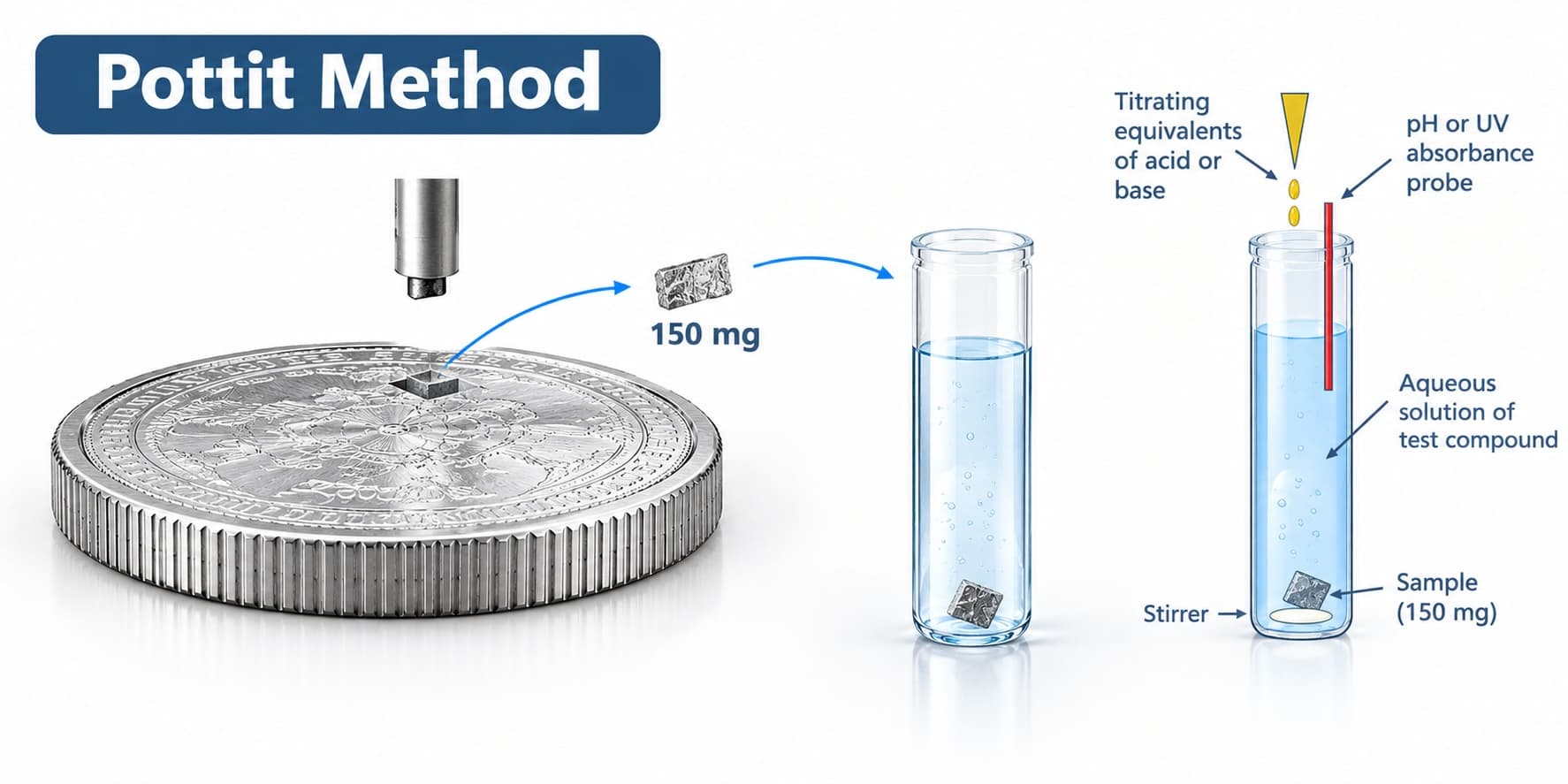
We sent it to WaarborgHolland, a Dutch assay office, and asked for two methods. Potentiometric titration dissolves a 150 mg sample and measures silver directly, accurate to about 0.09%; it returned 78.71% silver. XRF, accurate to about 0.6% and run on a Fischer GOLDSCOPE SD 520 benchtop unit, reads only the surface, so it showed exactly why the coin fools people: 90.39% on the intact skin, dropping to 78.74% once that skin was ground away. A 78% core wearing a 90% face.
What's Changed Since
The 2022 app answered a simpler question: is this coin silver? It gave a star rating, and this coin earned a passing one. That was not exactly wrong, because the coin really is silver. The trouble was that a star did not say how much silver. "Silver, passed" reads like a clean bill of health, even though this coin is only 78%.
The fix came in two steps. Since version 1.4.3 the app linked the star result to a minimum purity: the highest silver floor the measurement can stand behind. From version 2.2.1 on, that floor became the result itself. A positive reading is now given directly as "at least X% silver," and a star rating is no longer always shown. For this Trade Dollar the app reports "at least 70%," which is both true and precise.
Two things are easy to misread here. A genuine coin can also read "at least 70%" when the measurement cannot confidently prove more, and that is a correct result, not a red flag. And a modest floor is not an accusation; it only means we are reporting what we can defend. Faithfully stating what we know is the whole idea.
We also put money behind it. Through our report-and-win challenge we pay a reward for any verified false result, so a coin like this one is worth sending in.
What This Means for You
- Matching the easy specs is not proof. The right weight, size, and density, plus a silver acid color, do not prove .900 fineness. A good fake can hit all of them and still fall well short.
- You need a test sharp enough for the alloy. Separating a good silver fake from the real thing takes a bulk conductivity read (Sigma) or a lab assay. Weight, density, and acid color can't resolve 78% silver from 90% at all. Sound can, but only for a coin type with a consistent ping pattern, and a Trade Dollar's is not.
- One flag beats a chorus of passes. When a single method disagrees with everything else, chase that flag instead of outvoting it.
- A floor is not a grade. A result like "at least 70%" tells you what a test can prove, not that a coin is only 70% or that it is fake. The dangerous results are the over-confident passes, not the honest limits.
Frequently Asked Questions
- Can a fake silver coin pass an acid test?
Yes. A silver acid test's color does shift with purity, but not precisely enough to catch a small gap. This Trade Dollar is about 78% silver, and 78% and 90% silver give nearly the same red-brown color, so it passed the acid test even when the acid was dropped straight onto the bare cut core.
- Can XRF detect a fake silver coin?
Not always. XRF reads only the surface. This coin wears a thin skin enriched to about 90% silver, so XRF read 90.39% on the intact surface and passed it. Only after grinding that skin away did the same machine read about 78%. A surface-only reading can be fooled by a plated or enriched face.
- What is a surface-enriched counterfeit coin?
It is a coin with a thin outer layer enriched to the correct silver fineness, hiding a core that does not match. That core can be real silver at a lower purity, as in this Trade Dollar, or a cheap base metal. Either way, the genuine-looking skin defeats surface tests; a silver-alloy core can also pass weight, size, and density checks, while a base-metal core is more likely to fail them.
- Can a ping test tell 78% silver from 90%?
It depends on the coin type. Some types, Trade Dollars among them, have a naturally wide spread in ping sound even between genuine examples, so a 12-point purity gap like this one can fall inside that spread and still pass. Other coin types ring far more consistently, and there the app can resolve a much finer purity difference. That variation is exactly why the app reports a conservative minimum purity instead of a plain pass: it only claims what a given coin's own sound pattern can support.
- Which tests actually caught this fake?
Only two. Sigma Metalytics flagged it by reading the metal's bulk conductivity, with no damage to the coin. A lab potentiometric titration then measured the silver directly at 78.71% by dissolving a small sample. Every cheaper or surface-only method passed it.
What a Good Silver Fake Really Looks Like
This Trade Dollar was not crude pot-metal. It was real silver at about 78%, wearing a thin 90% skin, in a coin of the right weight, size, and density. That combination cleared almost every test collectors rely on, and even fooled a lab XRF on the intact surface. Only two measurements could separate 78% silver from 90%: a Sigma conductivity read, which caught it without damage, and a lab titration, which caught it by destroying a sample. The app that once gave this coin a bare 2-star pass now reports a minimum purity instead, so it states how much silver it can actually stand behind. When you test, remember that "close to genuine" is exactly what a good fake is built to be.
We documented this investigation across two videos: our first round of tests and the lab conclusion. Thanks again to Speg for the coin and his original analysis.
Think the App Got a Reading Wrong?
If the app's result looks wrong, please tell us. It now reports a minimum purity, an "at least X%" floor, so report any coin that turns out to hold less silver or gold than that floor. In the app, use Report last test to send us the case, and you might earn a reward. Reports like Speg's are exactly how we found this one and how we keep improving.
Want to understand the lab methods in more depth? See our guide on how to test silver coins.
