Three Suspected Fake Morgan Dollars Pass Both Ping and Sigma Tests
Keywords: Morgan dollar, silver coin authentication, ping test, Sigma Metalytics, coin verification, silver stacking, counterfeit detection, precious metal testing, multi-method testing, coin collecting
Introduction
Not every suspicious-looking coin is a counterfeit. Sometimes a collector's gut says "fake", while careful testing tells a different story. In this case, a collector named Chad reached out because he believed three of his Morgan dollars were counterfeits, even though all three had passed the ping test in the Precious Coin Tester app. After a full round of remote verification, those same three coins also passed Sigma Metalytics testing at a coin shop. The most likely conclusion: all three contain genuine 90% silver.
Summary of the Case
Chad owned three Morgan dollars, all of which passed the sound test in the Precious Coin Tester app. Because of how aggressively counterfeits have evolved, he still suspected they might be fakes and submitted a False Positive report to us. To verify, he went through a structured process:
- Ping test (Precious Coin Tester app): Passed on all three coins
- Weights: 1880: 25.7 g, 1886: 25.8 g, 1891: 26.1 g (nominal: 26.73 g)
- Diameters: 1880: 37.81 mm, 1886: 37.76 mm, 1891: 37.78 mm (nominal: 38.1 mm)
- Sigma Metalytics test (coin shop, all three coins): Passed
- Magnetic test (coin shop): Passed
- Coin shop opinion: The coins are real
After all these results, Chad decided to keep the coins.
Timeline of Events
1. The Initial Report
Chad contacted us through the app's False Positive reporting flow, writing:
I believe this Morgan dollar as well as one other that I have are fakes but they have both passed the ping test. The weight is 26.23 grams for the one that has a .wav file below. The other weighs 26.46 grams.
We listened to the sound file he attached. The acoustic signature matched that of a genuine Morgan dollar, consistent with at least 80% silver content. We explained that the ping test measures sound only, and a counterfeit with silver content above 80% could still pass. We asked him to go through the full verification process — including the $200 reward if the coins turned out to contain less than 80% silver.
2. Gathering Physical Measurements
Chad purchased calipers and a scale, and sent back photos of the measurements for all three Morgans — including a third coin (the 1891) he had not mentioned in his initial message. The precise scale readings also differed slightly from his earlier estimates. The results were slightly off nominal but not dramatic:
- Coin 1880: 25.7 g, 37.81 mm diameter
- Coin 1886: 25.8 g, 37.76 mm diameter
- Coin 1891: 26.1 g, 37.78 mm diameter
Morgan dollars in circulation can show modest weight loss from wear, so these numbers weren't a strong signal of counterfeiting on their own. The deviations weren't large enough to meaningfully affect the sound test outcome.
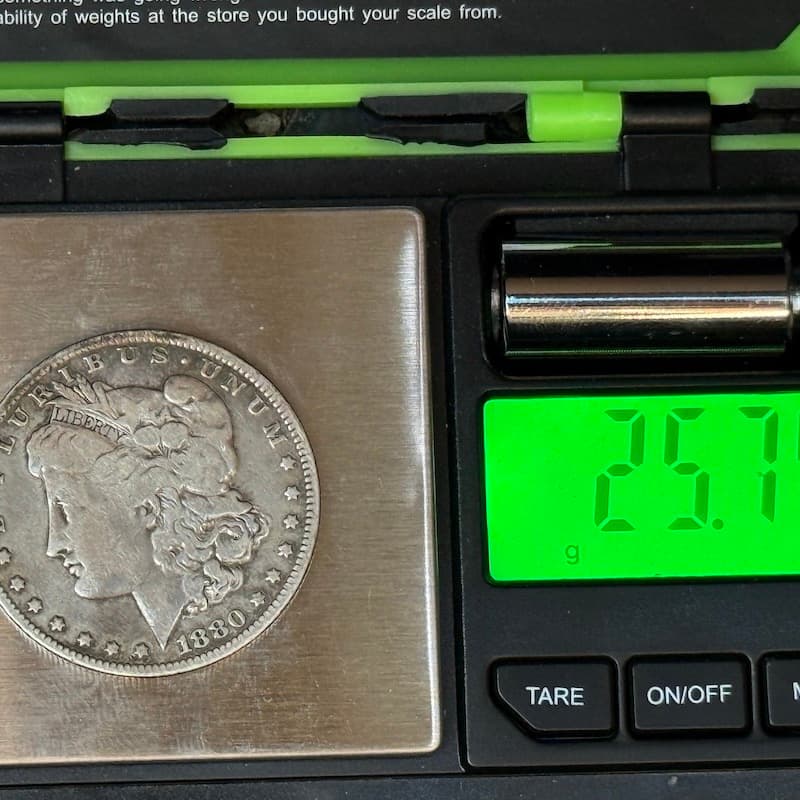
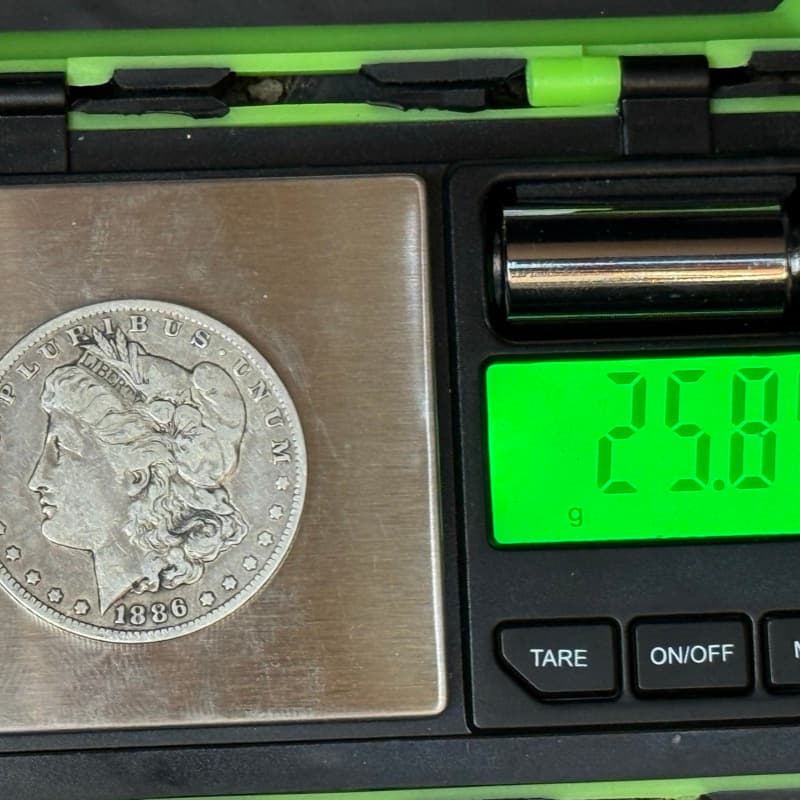
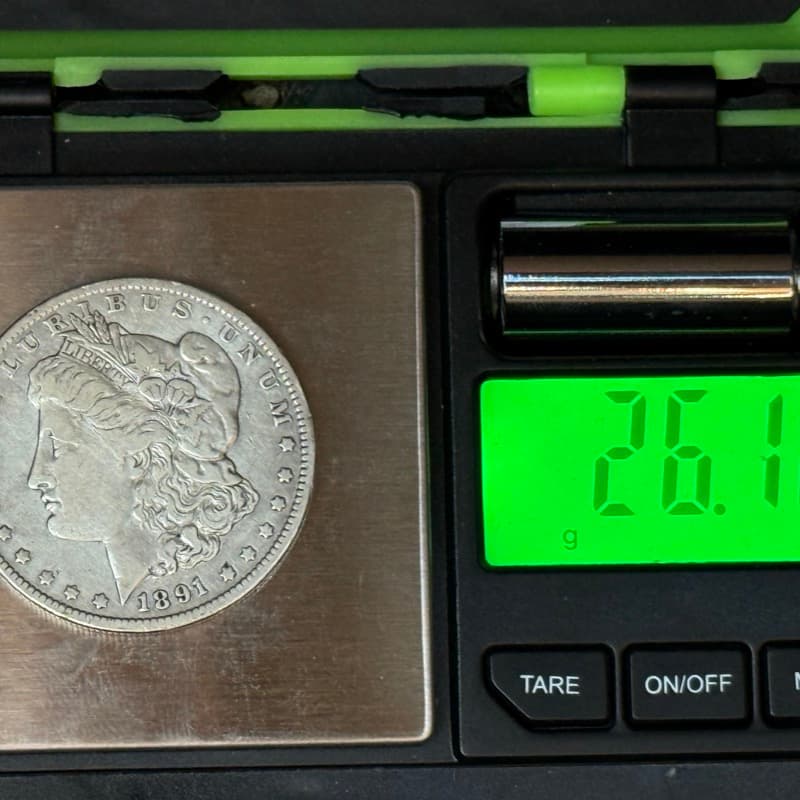
Weight measurements (nominal: 26.73 g)
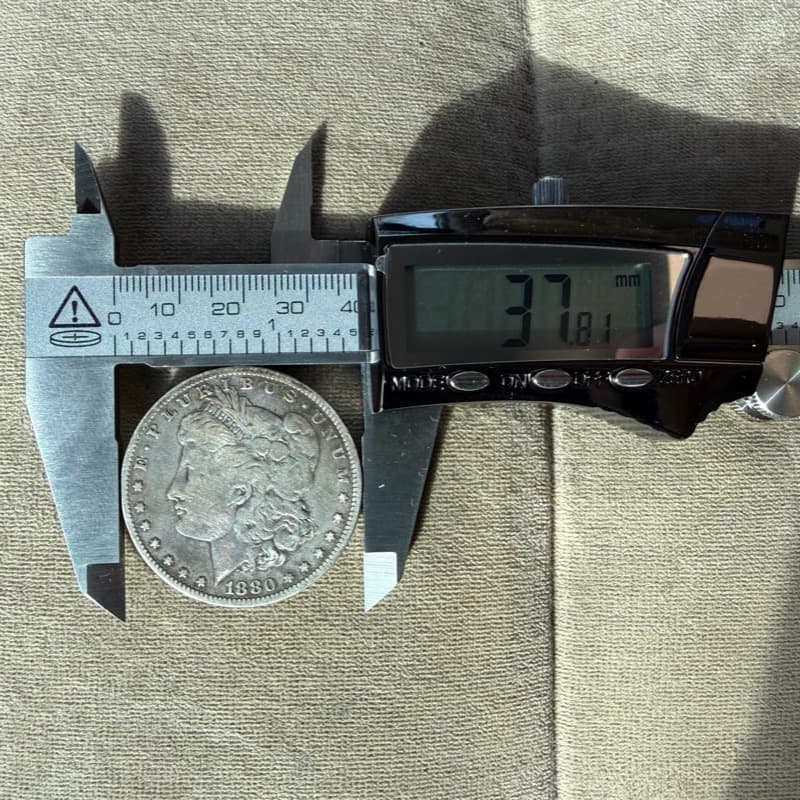
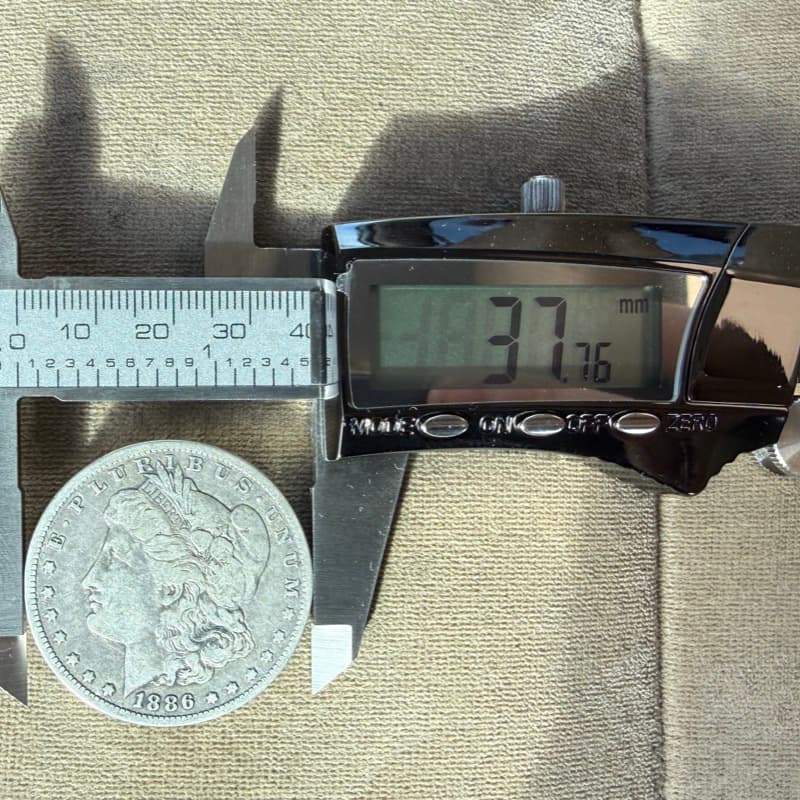
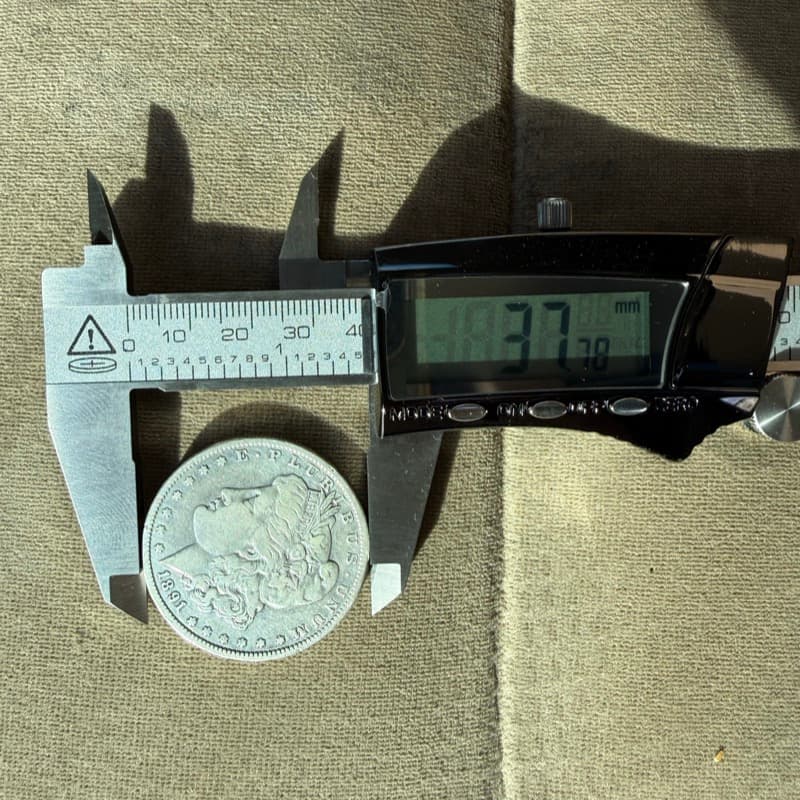
Diameter measurements (nominal: 38.1 mm)
3. Sigma Metalytics Test at a Coin Shop
Chad's local coin shop didn't have a Sigma device, so he travelled to a second shop. There, all three coins were tested on a Sigma Metalytics Pro verifier. The measurement mode displayed conductivity values consistent with 90% silver, and the pre-1900 silver verification test passed on all three coins.
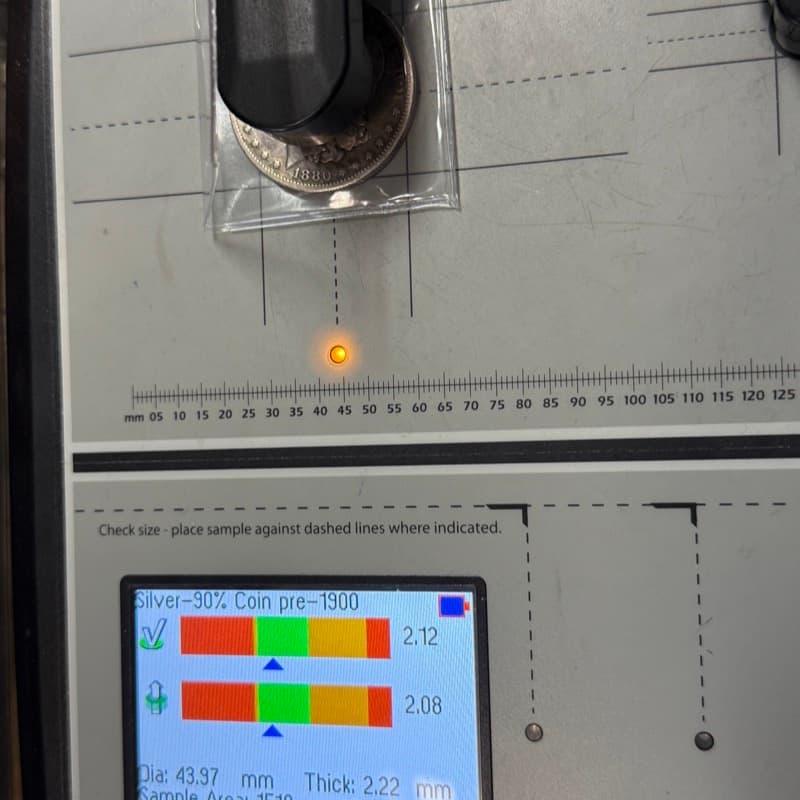
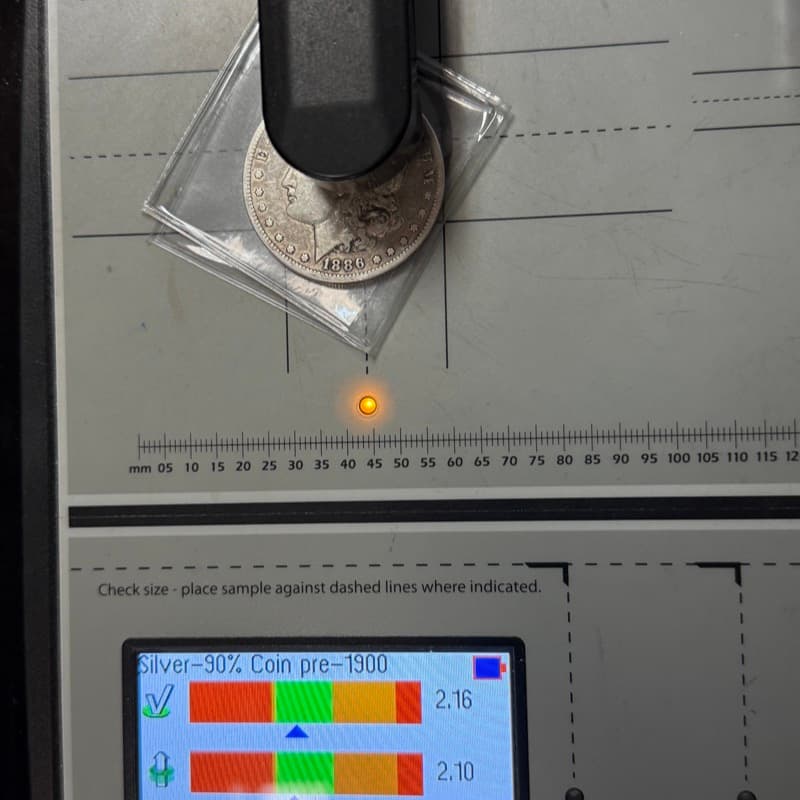
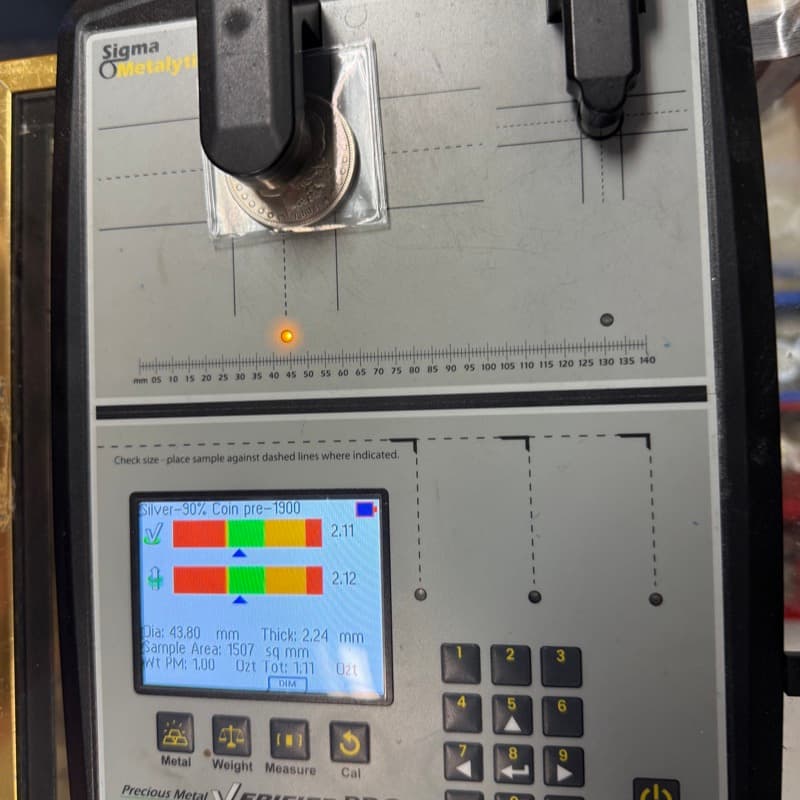
All three coins passed Sigma verification (readings consistent with 90% silver)
The coin shop also performed a magnetic test, which all three coins passed. Based on the combination of Sigma plus magnetic testing, the shop's professional opinion was that all three coins were real.
4. Chad's Decision
With every available non-destructive test in agreement, Chad decided to keep the coins:
I decided to just keep them since they tested out.
We offered to go further — a destructive lab analysis, with us covering melt value or paying the $200 reward if silver content came in below 80%. But with ping, Sigma, and magnetic tests all telling the same story, Chad didn't see the need.
Why We Think the Coins Contain Genuine Silver
The previous Morgan dollar case we documented, where a coin passed the ping test but failed Sigma verification, showed that a sophisticated counterfeit can defeat a single testing method. Chad's case is the opposite: every independent test agrees that the metal behaves like silver.
Forging a coin that simultaneously passes:
- An acoustic ping test (depends on the alloy's density, strength, and geometry), and
- A Sigma Metalytics conductivity test (depends on the alloy's electrical conductivity)
is extremely difficult. Silver's combination of acoustic and electrical properties is hard to mimic without actually using silver. We've never seen a confirmed counterfeit that passes both tests while also having correct weight and diameter. In our opinion, the most likely composition of Chad's three coins is genuine 90% silver.
That said, there's an important limit to what these tests can tell us. Both ping and Sigma measure material properties — they confirm the metal behaves like 90% silver, but they can't verify mint authenticity. A counterfeit struck from genuine 90% silver alloy would pass both the acoustic test and the Sigma test, and even destructive analysis (fire assay). What these methods reliably rule out is the more common fraud: base metals substituted for silver. Whether the coins are authentic US Mint issues or high-quality silver reproductions is a question only professional grading can settle. But on silver content, the evidence is consistent.
What About the Slightly Off Weights?
Two observations worth emphasizing for other collectors:
- Worn silver coins lose weight. A well-circulated Morgan dollar can easily weigh a few tenths of a gram less than the nominal 26.73 g without being counterfeit.
- Thickness and diameter vary with wear and with measurement technique. A caliper reading of 37.8 mm versus 38.1 mm is not, on its own, strong evidence of a fake.
Physical measurements are useful as one data point in a chain of evidence, but they should be interpreted together with acoustic and electrical tests, not in isolation.
What Collectors Can Learn From This Case
This case is the mirror image of the failed-Sigma case we published earlier — and it's just as useful:
- A coin you personally suspect is not necessarily a fake. Gut feeling is a valid reason to investigate further, but not a conclusion on its own.
- Agreement across independent tests is the strongest signal of authentic silver content. Ping test plus Sigma is a very robust combination for silver coins.
- The app's ping test is a first line of defense, not the only line. For high-premium coins, we always recommend pairing the app with a precious metal verifier when possible.
Conclusion
Chad's report is a reassuring counterpoint to the more alarming counterfeit cases we document on this site. Three coins he was convinced were fakes turned out, after careful multi-method testing, to be most likely genuine 90% silver. The ping test and the Sigma test both told the same story, and the coin shop's magnetic check agreed.
Chad went through the full process, shared his photos, and gave us permission to publish — we're grateful for that. Cases like his help the community calibrate how much weight to put on each type of test, and they show that responsible testing protects collectors in both directions: flagging real fakes, and confirming real coins.
Call to Action
If you have a coin that you suspect might be counterfeit, even if it passed the Precious Coin Tester app, please reach out. We're always up for verifying edge cases, and the $200 reward is available for the first verified false positive.
