John Caught 3 Expensive Fakes, Including a Krugerrand
Hooray Precious Coin Tester! The [...] South Africa 1 ounce Krugerrand has tested 100% FAKE, and my Precious Coin Tester & Pocket Pinger first caught it. A local licensed Assayer tested it on his expensive test equipment and verified it as FAKE. I've already got my money returned from the purchase.
Not many emails about a counterfeit coin open with "Hooray". This one came from John, one of our users.
He keeps writing to us about coins that failed in the app. So far, by his count, Precious Coin Tester has identified three expensive coins as fake. He recovered the purchase price each time.
Here are two of them.
The Fake Krugerrand
Earlier that day, John had written to us about the 1 ounce South African Krugerrand. It had tested fake, and he planned to have it checked on certified equipment. Then came the email above.
From the reported test, we suspected a copper core, though that's only our guess. A density test can help confirm a core like that.
He also put the value in simple terms:
The Precious Coin tester paid for itself more than 2X when it found one counterfeit coin.
The Fake 1810 Westphalia Thaler
A few weeks later, another email. This coin was dated 1810. It read "EINE FEINE MARK" and named the King of Westphalia in its legend.
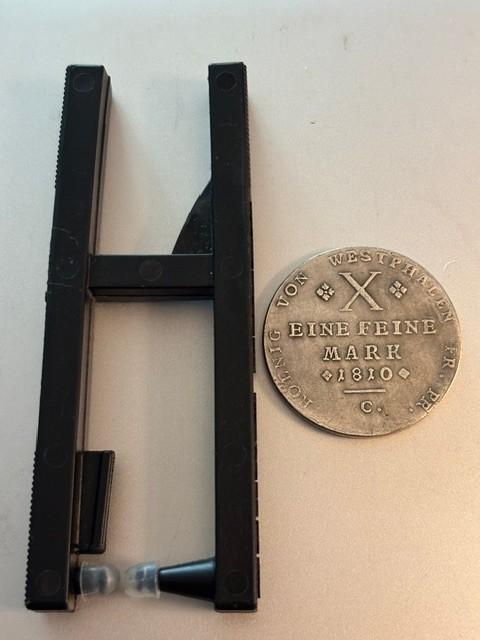
I just wanted to say Thank You! This beautiful and expensive coin failed on my Precious Coin Tester which led to further investigation that proved the coin to be counterfeit. Since purchasing your coin tester it has identified 3 expensive coins as fake. I was able to recover the purchase price each time, saving me many times the cost of the tool.
Beautiful, expensive, and counterfeit. A coin can be all three.
We looked into it as well. It's most likely meant to be a 1 Thaler of Jérôme Bonaparte, King of Westphalia. The genuine coin is .833 silver, 28.06 g and 38 mm. Both the weight and the diameter of John's coin were off.
Why This Matters
A coin you paid a lot for is a hard coin to doubt. A failed result gave John a reason to.
The app didn't settle these cases alone. It raised a flag and he followed it up, in time to recover the money. An assayer confirmed the Krugerrand, and further investigation confirmed the 1810 coin.
What You Should Know as Well
A failed result is a reason to investigate, so follow it up with other checks.
A pass has limits too. The app checks the metal, so it can't always tell a genuine coin from a replica made with the right metal. For valuable coins, combine it with other verification methods.
Caught a Fake With the App?
We'd love to hear about it, whether or not your email starts with "Hooray".
And if a result looks wrong, use Report last test in the app to tell us. You might even earn a reward.